Restaurant Kitchen Equipment List: A Complete Checklist for New Restaurants
A well-equipped kitchen keeps your restaurant running at full capacity by supporting speed, consistency and safety. Ergonomic, easy-to-use tools reduce strain and prevent errors during busy shifts, while reliable equipment ensures food is prepared to the same high standard every time.
Opening or upgrading a restaurant is a significant investment, and one of the biggest decisions you'll face is knowing what equipment you actually need — and what can wait. Use this checklist as a guide, then choose equipment based on your menu, production volume, available space and workflow.
1. Cooking Equipment
With high order volumes and limited prep time, the efficiency and consistency of your cooking line directly affects profitability and customer satisfaction. Choose carefully to help your team serve faster, reduce waste and maintain quality.
Ovens — versatile for baking, roasting and reheating menu staples like pizza, chicken and lasagna. Convection or combi ovens give even, efficient cooking.
Deep fryers — for fries, chicken and other fried items, cooked quickly at consistent temperatures.
Griddles — flat, heated surfaces for burgers, pancakes and eggs, cooked with speed and precision.
Grills — add char and flavour to burgers, chicken, skewers and other grilled staples.
Holding equipment — keeps cooked food at safe serving temperatures until it's plated or dispatched.
Toasters — speed up bread and bun prep for breakfast and sandwich service.
Microwaves — for fast, even reheating and defrosting, reducing the risk of undercooked or improperly thawed food.
For high-volume kitchens, equipment offering speed, consistency and precise control pays off quickly in day-to-day operations.
2. Beverage Equipment
Drinks can be a high-margin item. Reliable beverage equipment — consistent ice production, well-maintained dispensers and proper refrigeration — is key to maintaining quality.
Beverage dispensers — fast, self-serve access to soft drinks, coffee and juice with portion control.
Ice machines — a steady supply of ice for cold, refreshing drinks.
3. Refrigeration & Cold Storage
Refrigeration keeps ingredients fresh and safe. Look for durable, high-capacity units with reliable temperature control that can handle the demands of a busy kitchen.
Refrigerators — commercial-grade units for consistent cooling and easy cleaning.
Freezers — for frozen ingredients, prepped food and bulk supplies.
Walk-in or modular cold rooms — for restaurants handling large volumes of fresh produce, meat or dairy, a planned cold storage system is often more practical than standalone units alone.
Display refrigeration — for beverages, desserts or grab-and-go items.
4. Storage Equipment
Good storage keeps a kitchen organised and supports food safety — proper separation of raw and ready-to-eat items, temperature-controlled storage, clear labelling and first-in-first-out (FIFO) rotation. This reduces cross-contamination risk and helps staff restock and find ingredients faster during peak hours.
Food storage containers — various sizes for sauces, toppings and bulk ingredients, clearly labelled for identification and rotation.
Drying racks — let cookware, utensils and trays dry safely without cross-contamination.
Shelving — maximises vertical space for dry goods; install at a height that avoids overreaching or excessive bending.
Utility carts — move supplies, dishes and ingredients around the kitchen safely.
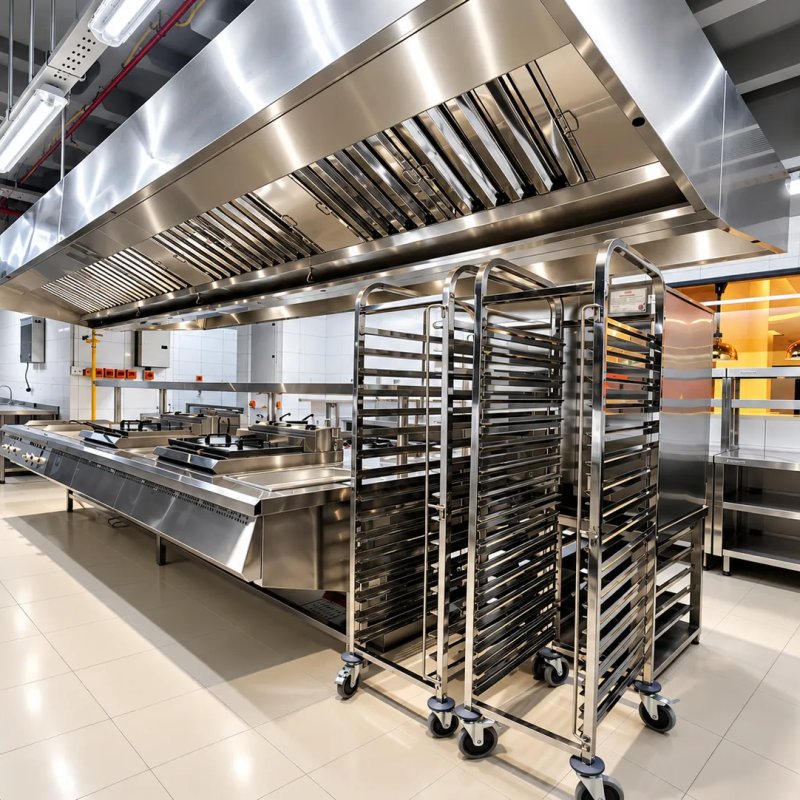
Sheet pan racks — space-saving, vertical storage for pans and prep trays, freeing up counter space.
5. Food Preparation Equipment
Prep can consume a large share of kitchen time. The right equipment speeds up repetitive tasks and keeps results consistent — uniform vegetable cuts for salads and wraps, or even slices of deli meat and cheese for sandwiches.
Food processors — faster chopping, slicing and blending.
Prep tables — clean, organised workspaces for ingredient prep and assembly.
Mixers — commercial-grade planetary or spiral mixers for dough and batter in bulk.
Blenders — for smoothies, soups and sauces.
6. Stainless-Steel Fabrication & Workstations
Good kitchen planning isn't only about machines — your counters, sinks and storage need to support a logical flow from receiving through prep, cooking, washing and service.
Work tables, preparation counters, sinks
Storage cupboards, wall shelves, racking
Equipment stands and trolleys
Pass-through and service counters
SS 304 stainless steel is the standard choice for foodservice fabrication because of its durability and cleanability.
7. Smallwares
Smallwares are the hand tools your line and prep cooks use every shift. Having enough on hand means staff aren't waiting on shared items during service.
Chef knives — for quick, consistent chopping, slicing and precision cutting.
Cutting boards — separate boards for raw meat, seafood, poultry and vegetables to prevent cross-contamination.
Mixing bowls — for combining, tossing and portioning.
Pans and pots — for sautéing, searing, shallow frying, boiling and simmering.
Whisks and kitchen spoons — for blending, stirring and serving.
Food pans — for storing and serving prepped ingredients, often in hot and cold wells.
8. Cleaning & Sanitation
Cleanliness is non-negotiable in any restaurant kitchen. Health inspectors check food-contact surface sanitation, chemical storage, handwashing practices and waste disposal — so plan the wash-up and cleaning setup as part of the kitchen, not an afterthought.
Commercial dishwashers and pot/utensil washers
Multi-compartment sinks and pre-rinse spray stations
Hand-washing and sanitising stations
Mop buckets, mops and floor squeegees
Sanitising chemical dispensers and degreasers, stored safely
Colour-coded cleaning cloths and scrub pads
Waste bins and liners
9. Ventilation & Kitchen Exhaust
Cooking generates heat, steam, smoke and grease. Ventilation should be designed around your equipment and layout from day one — not added as an afterthought once the line is in.
Extraction hoods and grease filters
Exhaust fans and make-up air systems
Ductwork and air balancing
Odour and heat management
10. Food Holding & Service
If you prepare food in batches or serve high volumes, holding equipment protects quality and speeds up service.
Hot-holding cabinets and bain-marie systems
Heated counters and pass-through shelving
Service counters and tray/trolley systems
Packaging and dispatch stations for takeaway and delivery
11. Safety & Hygiene
Safety belongs in the design stage, not as an afterthought once the kitchen is running.
Fire extinguishers, fire blankets and suppression systems
Gas detection and emergency shut-off systems
First-aid provisions and non-slip flooring
Proper drainage and hand-washing facilities
Safe chemical storage and waste segregation
Make sure your design meets applicable local health, fire, building and food-safety requirements.
12. The Small Items That Are Easy to Forget
Large equipment gets the attention, but small items add up fast and affect how smoothly the kitchen runs day to day. Budget for:
Ladles, tongs and spatulas
Food thermometers and kitchen timers
Trays, baking sheets and oven racks
Colanders, strainers and sieves
Storage bins and ingredient containers
Floor mats
Waste-segregation containers
Staff uniforms and protective equipment
How to Prioritise Your Equipment
If your budget is limited, don't buy everything at once. Prioritise:
Equipment for your core menu
Reliable refrigeration and cold storage
Essential preparation equipment
Washing and sanitation
Ventilation and safety systems
Storage and fabrication
Additional equipment that improves efficiency
The goal isn't the biggest kitchen possible — it's a kitchen that's fit for purpose, efficient, and ready to grow.
Equipment You Can Add as You Grow
Some equipment isn't essential on day one but pays off as you expand: blast chillers, vacuum-packing equipment, ice machines, advanced cooking systems, additional refrigeration, beverage and coffee equipment, and specialised bakery or pastry equipment. Adding these gradually protects your initial capital while letting the operation scale with demand.
Don't Choose Equipment in Isolation
One of the biggest mistakes in setting up a kitchen is selecting equipment item by item without considering the whole operation. Before purchasing, ask:
What is your menu, and how many meals will you produce?
What are your peak periods?
How much space is available, and how will ingredients and staff move through it?
What are your power, water, drainage and ventilation requirements?
What level of after-sales support will you need?
Plan Before You Purchase
Equipment selection is just one part of a successful kitchen project. The process should start with consultation, site assessment and workflow planning, followed by equipment selection, design, fabrication, supply, installation, commissioning and ongoing support.
At Sheffield Africa, we take a complete approach to commercial foodservice solutions, helping restaurants plan their kitchens around real operational needs rather than simply supplying equipment.
Opening a new restaurant? Speak to our team about your requirements — let's plan a practical, efficient, future-ready kitchen together.